Successful development of an antibody therapy for severe fever with thrombocytopenia syndrome (SFTS) using an in-house mRNA platform
[Korean University Newspaper, Reporter Mun Chunchun] The research team led by Professor Nam Jae-hwan in the Department of Biomedical Sciences at the Catholic University of Korea (President Choi Jun-kyu) has developed an mRNA-based antibody therapeutic against the severe fever with thrombocytopenia syndrome (SFTS) virus. The results of this study were published in the Journal of Controlled Release (IF=10.5), the world’s leading international journal in the field of drug delivery, recognizing the excellence of the research.
SFTS, also known as the “killer tick virus,” is an acute infectious disease that causes 200–300 cases annually in South Korea alone and has a mortality rate of about 20%. With no approved treatments or vaccines to date, the therapeutic developed by the research team demonstrated 100% survival in an animal model infected with SFTS, indicating the potential of an antibody-based therapeutic strategy using mRNA technology.
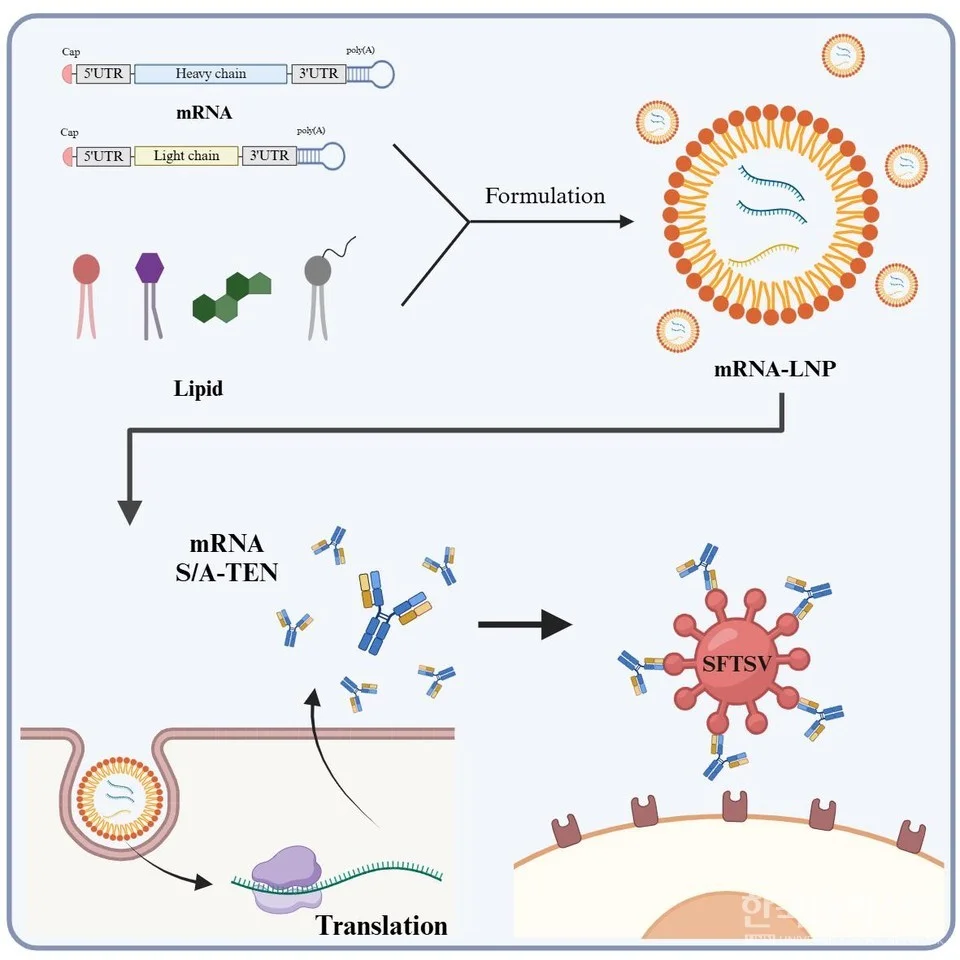
Professor Nam Jae-hwan’s team synthesized human monoclonal antibodies in mRNA form that recognize the SFTS virus surface glycoprotein (Gn) and delivered them via lipid nanoparticles (LNPs) so that antibodies are produced in vivo. When the mRNA/LNP-based antibody therapeutic was administered to mice infected with a lethal dose of the virus, all animals survived, demonstrating therapeutic efficacy.
The mRNA/LNP-based antibody therapeutic is currently undergoing nonclinical studies through SML Biopharm Co., Ltd. to enter Phase 1 clinical trials. The research team confirmed through this study that mRNA technology is a platform capable of rapidly and cost-effectively expressing antibodies, and they noted a high potential for expansion to various diseases such as cancer and chronic infectious diseases.
This study by Professor Nam Jae-hwan’s team was conducted with support from the Ministry of Food and Drug Safety’s project “Development of toxicity assessment technologies for mRNA vaccines, etc.” and the Korea Disease Control and Prevention Agency’s research project “Preclinical sample production and evaluation to secure therapeutic candidates for severe fever with thrombocytopenia syndrome (SFTS).” In addition, the SML Biopharm research team, Professor Cho Nam-hyuk’s team at Seoul National University, and Professor Lee Sang-myeong’s team at Chungbuk National University participated as co-researchers.
Professor Nam Jae-hwan of the Department of Biomedical Sciences at the Catholic University of Korea said, “This study is the first to demonstrate that mRNA-based antibody therapy can serve as an effective countermeasure against SFTS. After completing the preclinical research, we will do our utmost to provide practical help to SFTS patients through clinical trials.”
Source: Korean University Newspaper (https://news.unn.net/news/articleView.html?idxno=577736) Professor Newspaper (https://www.kyosu.net/news/articleView.html?idxno=133388) E-Donga (https://edu.donga.com/news/articleView.html?idxno=85588)